Choosing between Palo Alto and Los Altos is not just about picking a prestigious address. Even though both are highly competitive Peninsula markets, they offer different pricing patterns, housing options, and day-to-day experiences. If you are weighing both cities, this comparison will help you understand how the markets really differ so you can make a more confident decision. Let’s dive in.
Price trends in Palo Alto and Los Altos
At a glance, Los Altos had the higher median sale price in March 2026. Redfin city snapshots show a median sale price of $4.15 million in Los Altos, compared with $3.535 million in Palo Alto.
That does not tell the whole story, though. Palo Alto posted a higher median price per square foot at $1.96K, compared with $1.84K in Los Altos. Palo Alto also showed a stronger sale-to-list ratio at 107.1%, while Los Altos came in at 104.5%.
Both cities moved quickly, with homes selling in about 10 days on average. Palo Alto had 46 sales in the month, and Los Altos had 31 sales, which means monthly median numbers can shift noticeably when only a few dozen homes close.
What the market stats really mean
If you are comparing these markets citywide, Los Altos currently looks more expensive by total sale price. Palo Alto, however, looks more expensive on a per-square-foot basis and more competitive in bidding behavior.
That matters if you are deciding how to structure your search or offer strategy. A higher median sale price in Los Altos may reflect the city’s larger-lot housing profile, while Palo Alto’s stronger over-list activity suggests buyers may be competing more aggressively for certain homes.
For buyers and sellers alike, the key takeaway is that headline numbers do not tell the full story. In markets this tight, it helps to look at price, home size, lot size, and negotiation dynamics together instead of relying on one number alone.
Housing stock feels different in each city
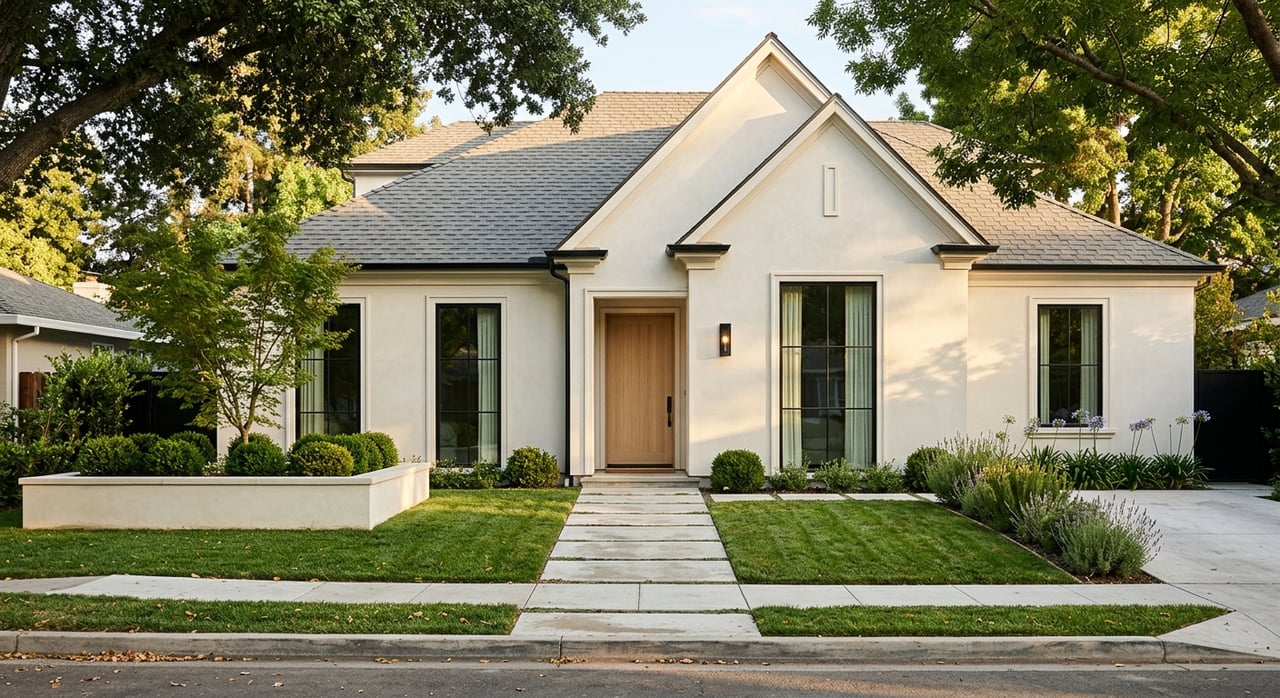
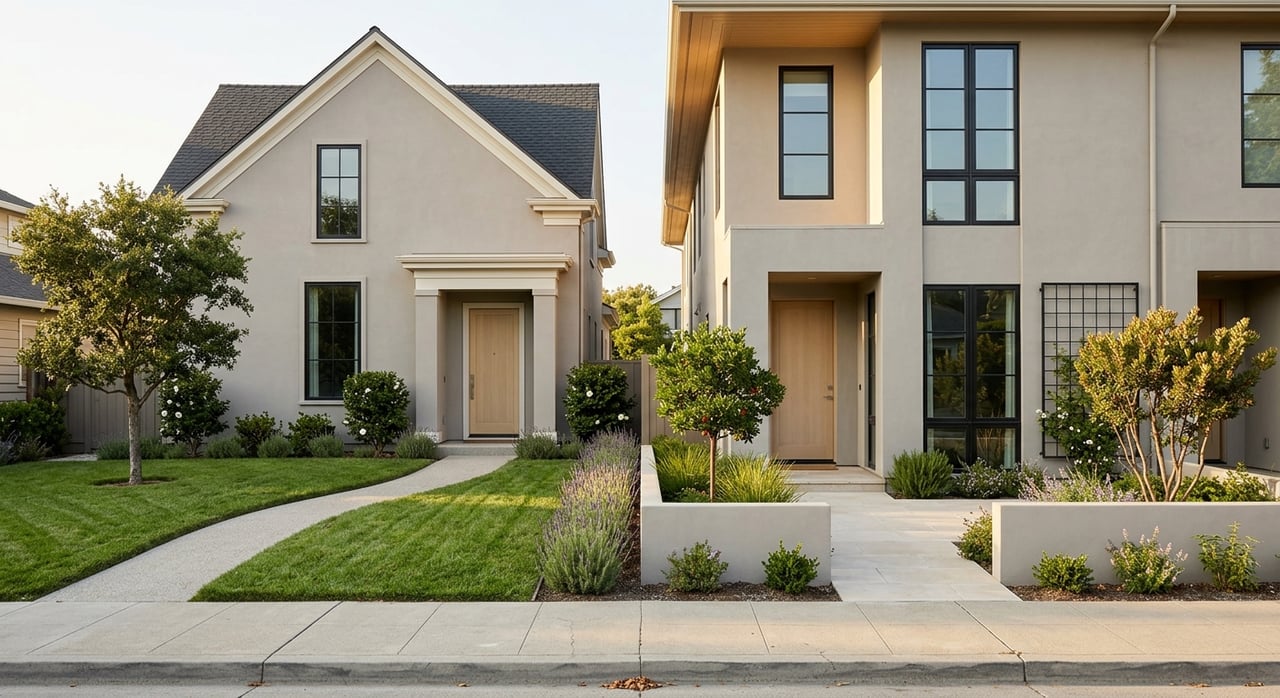
One of the biggest differences between Palo Alto and Los Altos is the housing stock. Palo Alto has more internal variation in lot size and home scale, while Los Altos is more consistently centered on detached homes on larger lots.
Palo Alto’s single-family zoning includes five R-1 subdistricts with typical lot sizes of 4,980, 5,810, 6,640, 8,300, and 16,600 square feet. The city’s technical manual also notes that the main house may not exceed 6,000 square feet within that R-1 framework.
The same manual shows more restrictive standards for substandard lots, including a single-story limit and 17-foot height cap. In practical terms, that means Palo Alto can offer more variation from one property to the next.
Los Altos is more uniform in its single-family core. The city’s R1-10 subdivision requirements list minimum lot sizes of 10,000 square feet for interior lots, 11,000 square feet for corner lots, and 15,000 square feet for flag lots.
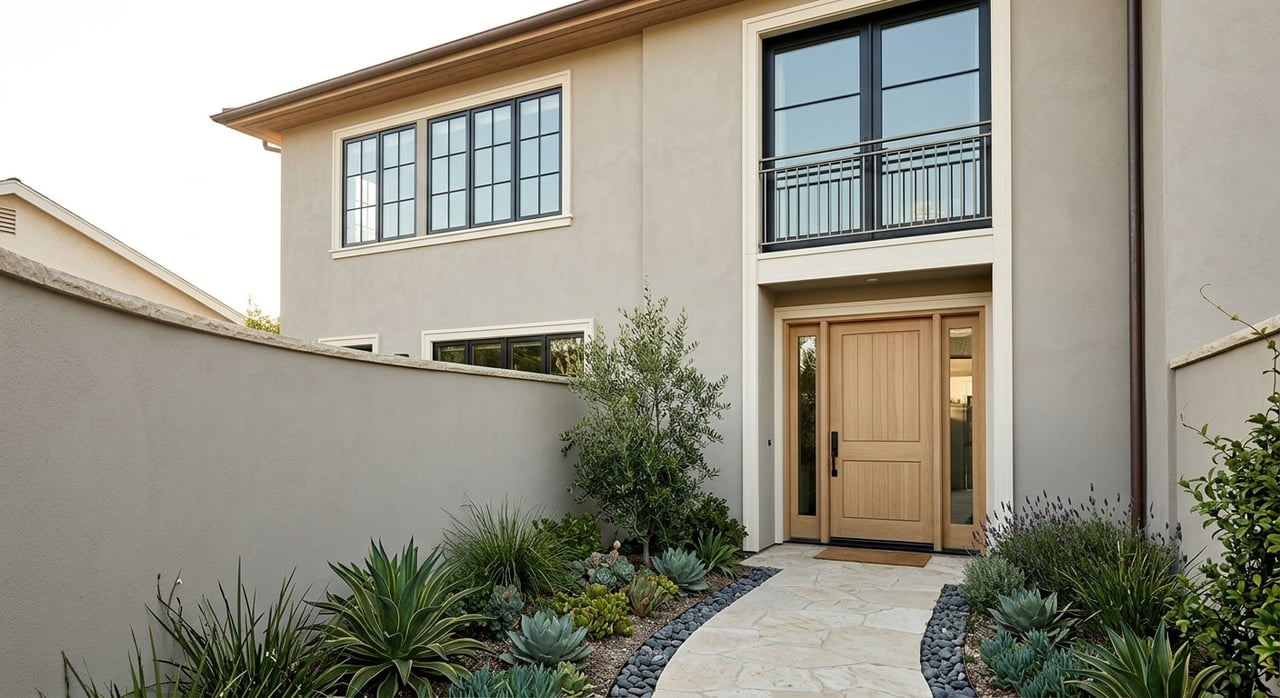
Los Altos also requires design review for exterior alterations, additions, and new construction in single-family neighborhoods. That adds another layer of consistency to the built environment.
What buyers usually notice first
When you tour homes in both cities, the contrast often feels clear. Palo Alto can present a broader mix of home sizes, lot dimensions, and neighborhood patterns.
Los Altos tends to feel more consistently large-lot and residential. That does not mean every home is the same, but it does mean the overall housing experience is often more uniform.
Daily lifestyle and neighborhood character
Market stats matter, but so does how a place feels once you live there. This is where Palo Alto and Los Altos start to separate even more clearly.
Los Altos describes itself as having a tree-lined, small village atmosphere with seven small retail districts. That civic framing points to a more residential and lower-intensity environment.
Palo Alto has a more institution- and downtown-driven profile. Its visitor information highlights shopping and dining, Stanford University, the Palo Alto Art Center, the Junior Museum & Zoo, libraries, and outdoor recreation.
The city library system includes five branches, and Palo Alto maintains more than 4,000 acres of open space preserves along with 162 acres of neighborhood parks and playing fields. That creates a broader amenity mix for residents who want active public spaces and destination-oriented attractions close by.
Downtown experience compared
Downtown Palo Alto is described as a hub for restaurants, coffee shops, theaters, art galleries, and locally owned retail. It tends to feel denser and more commercially active.
Downtown Los Altos centers on Main and State Streets, with Veterans Community Plaza serving as a key civic hub. The Los Altos Community Center, which opened in October 2021, adds 24,500 square feet of community space, programming rooms, a playground, a commercial kitchen, bocce ball courts, and room for a future café.
If you want a downtown that feels more like a destination, Palo Alto may stand out. If you prefer a village-style core with a more relaxed civic rhythm, Los Altos may feel like a better fit.
Commute and transit access
If your weekly routine depends on transit options, the difference here is meaningful. Palo Alto officially describes itself as a walkable city with a strong bike network, and it has two Caltrain stops within the city.
Palo Alto also points to Stanford’s Marguerite shuttle, VTA buses, rideshare access, local taxis, and connections to highways 101, 280, 84, and 92. The city is also identified as a Gold-Level Bicycle Friendly Community.
Los Altos has regional transit access, but it does not offer the same in-city rail convenience. According to the city’s complete-streets plan, the closest Caltrain stations are on San Antonio Road and in Mountain View, with Mountain View less than one mile from the city and San Antonio about 0.54 miles from the nearest city boundary.
Mountain View station also connects to VTA light rail. Los Altos also highlights transportation resources such as ride reimbursement, door-to-door services, and paratransit-related options.
Which city is easier for car-free errands?
Based on official city information, Palo Alto is the stronger fit if you want more direct rail access, a more walkable layout, and stronger bike infrastructure. Los Altos can still work well for regional access, but it is less centered on in-city transit convenience.
For many buyers, this becomes a lifestyle question. If you want to step into a more connected transit environment, Palo Alto has the clearer advantage.
Parking and everyday convenience
Parking may seem like a small detail until it shapes your daily routine. Here, the two downtowns function differently.
Downtown Los Altos has about 1,400 free public parking spaces. That supports a more park-and-stroll experience for errands, dining, and short visits.
Downtown Palo Alto is more managed. The city uses four color-coded parking zones, offers free parking for stays of three hours or less, and sells all-day visitor permits and employee permits.
That setup makes Palo Alto feel more urban and more regulated. Los Altos, by contrast, often feels simpler for quick downtown access by car.
How to decide which market fits you
The better choice depends less on prestige and more on how you want to live. Buyers who want stronger transit access, bike connectivity, and a more active downtown environment often lean toward Palo Alto.
Buyers who prioritize larger lots, a quieter village feel, and easier downtown parking often lean toward Los Altos. Those patterns are supported by the zoning, transit, and amenity differences in the city sources.
A helpful way to frame the decision is this: Palo Alto behaves more like a broader, internally varied market, while Los Altos behaves more like a constrained large-lot market. That is why comparing only sale price can miss what really matters.
Before you choose, focus on the factors that will affect your daily life most:
- Lot size and home scale
- Transit and commute style
- Downtown activity level
- Parking convenience
- How much neighborhood variation you want
When you are making a move at this price point, strategy matters. The right comparison can help you avoid chasing the wrong metric and instead focus on the location that truly fits your goals.
If you want help comparing homes, pricing patterns, and lifestyle tradeoffs across the South Bay, Sunaina Arora offers a data-driven, high-touch approach that makes complex decisions easier.
FAQs
How do Palo Alto and Los Altos compare on home prices?
- Los Altos had the higher median sale price in March 2026 at $4.15 million, while Palo Alto had the higher median price per square foot at $1.96K.
Which city has larger lots, Palo Alto or Los Altos?
- Los Altos generally has larger minimum lot sizes in its single-family core, while Palo Alto has more variation in lot size across its R-1 subdistricts.
Which city offers better transit access, Palo Alto or Los Altos?
- Palo Alto offers more direct rail access because it has two Caltrain stops in the city, along with bike and shuttle options.
Which city is easier for downtown parking, Palo Alto or Los Altos?
- Los Altos is generally easier for downtown parking because it offers about 1,400 free public parking spaces.
Which city feels more urban, Palo Alto or Los Altos?
- Palo Alto tends to feel more urban because of its denser downtown, stronger transit access, and broader mix of commercial and civic amenities.