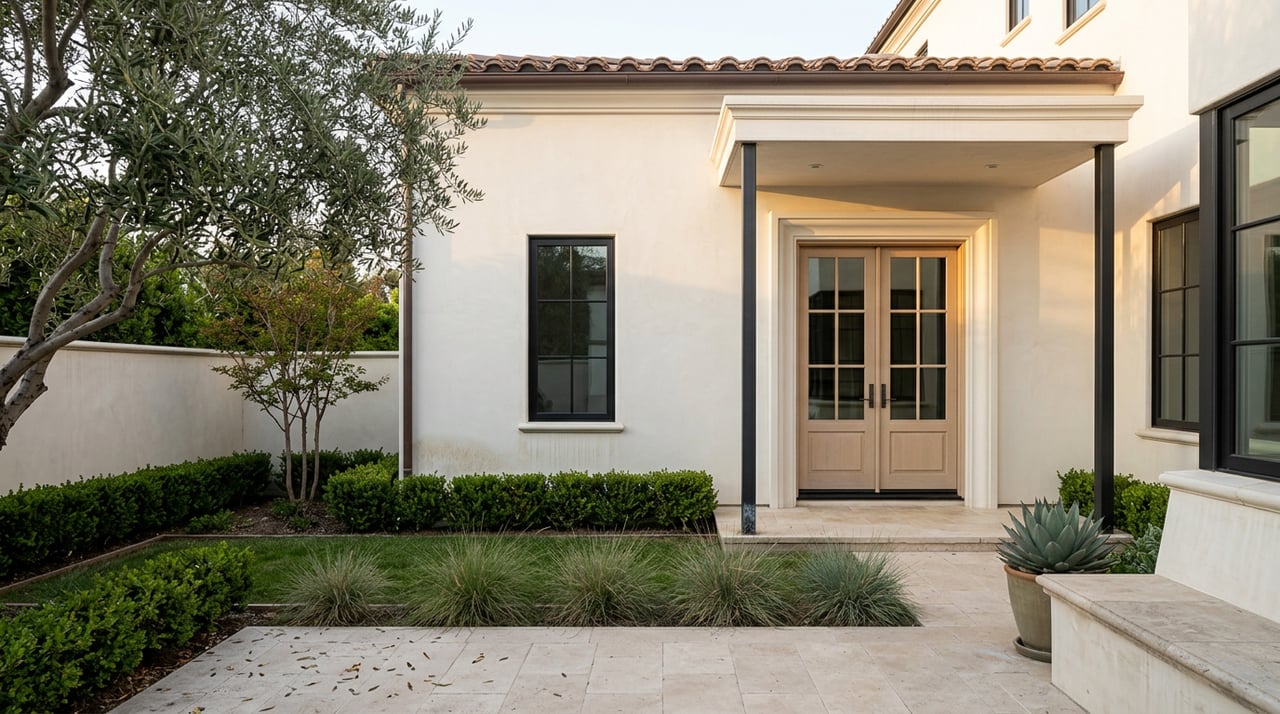
A buyer runs the math meticulously. Income, down payment, rate lock, monthly ceiling, all of it lines up for a home in the $1.6 million range. The offer gets accepted. Then, somewhere in escrow, a document lands with a line item nobody mentioned during the tour: an annual special tax of $6,000, tied not to the home's value but to a bond the neighborhood took out before it was ever built. The mortgage still works. The number the buyer thought they were carrying does not.
This is not a rare accident in Santa Clara. It is a structural feature of the city's housing stock, and it splits the market in a way that has nothing to do with school assignment, commute time, or curb appeal. It has to do with the year the ground was broken.
A Tax That Ignores the Price Tag
Every home in California carries a base property tax of roughly 1 percent of assessed value under Proposition 13, plus small voter-approved additions that typically bring established Santa Clara neighborhoods to an effective rate of about 1.10 to 1.25 percent. That part scales with price. A more expensive home pays more.
A Mello-Roos assessment does not work that way. It is a flat annual dollar amount, set by a Community Facilities District (CFD) and repaid over a bond term, and it is calculated by land use category and parcel, not by what the home sold for. Across Santa Clara County, these assessments typically run $2,500 to $7,500 or more a year, and because the number does not move with price, it lands proportionally harder on the buyer who paid less for a similar unit in the same development. In a CFD-heavy pocket of the county, that combination can push the effective property tax rate to 1.4 to 1.8 percent of purchase price, a gap of $10,000 or more a year on a $2 million home.
None of this shows up in the listing price. Most of it does not show up in the MLS description either.
Where the Line Actually Falls
The mechanism behind Mello-Roos is what makes the geography predictable rather than random. The Community Facilities Act that created these districts became law in 1982. A neighborhood cannot carry a Mello-Roos assessment if it was fully built before the law existed. That single fact draws a cleaner map of Santa Clara's tax exposure than any zip code ever could.
Rivermark, the roughly 152-acre planned community built out starting in 2003 with its own retail center, K-8 school, and library, is one of the small number of Santa Clara County communities that Peninsula-area real estate professionals point to by name when they map CFD exposure, alongside comparable master-planned redevelopments like Bay Meadows in San Mateo and Redwood Shores in Redwood City. The city has also formed newer Community Facilities Districts on its own books in recent years, the kind of financing vehicle typically used to fund roads, parks, and infrastructure for large projects before a single unit is occupied. The 240-acre Related Santa Clara development next to Levi's Stadium, which the City Council approved for an amended land use plan in July 2025 and which is slated to eventually include up to 1,680 residential units, sits squarely in the category of large-scale build where this kind of financing is standard practice. Anyone tracking that project for a future home purchase should expect a special tax disclosure to be part of the package once units come to market.
Now put that next to the neighborhoods that make up most of Santa Clara's actual housing stock. Maywood, the mid-1950s Eichler tract built by John Mackay in the 95051 zip code, predates the Mello-Roos Act by nearly three decades. Bonnie Brae, roughly 263 homes near Monroe and Bowers built in the early 1960s, is older still relative to the law. Darvon Park, developed in phases from Bowers Creek across to Calabazas Creek starting in the late 1950s, and Killarney Farms North and South, built in 1957 and 1961 respectively, sit in the same category. So does Briarwood, one of the first subdivisions on Santa Clara's western outskirts, with roughly 520 single-family homes dating to 1954. None of these tracts can carry a CFD special tax, because the legal mechanism that creates one did not exist when they were platted.
| Area | Built | Mello-Roos exposure |
|---|---|---|
| Rivermark | 2003 | Named CFD community |
| Related Santa Clara (forthcoming) | Approved 2025, multi-phase | Likely, given project scale |
| Maywood (Eichler tract) | Mid-1950s | Predates the 1982 Act |
| Bonnie Brae | Early 1960s | Predates the 1982 Act |
| Darvon Park | Late 1950s | Predates the 1982 Act |
| Killarney Farms N/S | 1957 / 1961 | Predates the 1982 Act |
| Briarwood | 1954 | Predates the 1982 Act |
The dividing line is not a neighborhood's reputation. It is a construction date measured against a 1982 statute.
Why the Timing Matters Right Now
Over the three months ending June 2026, the median sale price for a Santa Clara home ran about $1.7 million, down roughly 2.6 percent from the same period a year earlier, according to Redfin's tracking of MLS data. Homes that used to move in 12 days are now taking closer to 14. That shift matters here for a reason that has nothing to do with home values directly: a softening market gives buyers less room to absorb a cost they did not budget for, and it gives sellers less room to simply price around it.
In a rising market, a seller in a CFD-carrying development can often lean on appreciation to offset the perception of a higher carrying cost. In a market where days on market are stretching and price growth has gone flat to slightly negative, that cushion is thinner. A buyer comparing two homes at similar asking prices, one in an older tract with no special tax and one in a newer development carrying $4,000 to $6,000 a year in CFD assessment, is doing real math on the difference, and in the current environment they have both the information and the negotiating position to act on it. Agents who track CFD-affected parcels in Silicon Valley generally estimate that every $3,000 in annual special tax reduces a buyer's effective purchasing power by roughly $50,000 to $60,000 at prevailing mortgage rates, since lenders fold the assessment into debt-to-income calculations the same way they treat a mortgage payment.
The Documents That Actually Tell You
Waiting until the listing agent volunteers this information is the wrong order of operations. Three sources settle the question before an offer goes in.
- The parcel's current property tax bill, pulled by APN through the Santa Clara County Assessor's records, which itemizes any CFD special tax as a separate line from the base 1 percent rate.
- The preliminary title report, which lists any recorded special tax lien tied to the property, independent of what the seller remembers or discloses.
- For new construction specifically, the Notice of Special Tax, which California law requires the developer to deliver within 14 days of escrow opening. That notice must state the current tax, the maximum the CFD is authorized to levy, and the conditions under which it can rise. If it arrives late or not at all, the buyer has the right to rescind the purchase agreement within three days of finally receiving it.
For resale properties inside a CFD-affected development like Rivermark, the assessment does not reset with each sale. It runs with the land, meaning a buyer purchasing a ten-year-old resale home there inherits whatever remains of the original bond term, not a fresh clock.
Using the Number, Not Just Finding It
A documented Mello-Roos gap is not just a disclosure item. It is negotiating material. If a home carries $5,000 a year in special tax and recent comparable sales in the same tract show a lower average, that delta is real money over the remaining bond term, and it is a legitimate basis for a lower opening offer, particularly in a market where days on market are already stretching. On the seller side, the same logic runs in reverse: pricing a CFD-affected home as though it competes head to head with a Mello-Roos-free listing in Maywood or Bonnie Brae, without accounting for the tax gap in the strategy, risks longer time on market and a harder conversation at the negotiating table later rather than sooner.
A Few Questions Worth Settling Early
Does Mello-Roos ever expire? Yes. Most Community Facilities Districts are structured as bonds with a 25 to 40 year term. Once the bond is repaid, the special tax drops off the tax bill, though some districts continue a smaller ongoing charge for services like landscaping or patrol that requires a separate vote to end.
Can it be deducted like regular property tax? Generally no. Because it is not based on assessed value, Mello-Roos does not qualify as an ad valorem tax for the standard federal property tax deduction. A portion tied to ongoing maintenance or services may be partially deductible in specific cases, but that requires review from a tax professional familiar with the individual CFD's structure, not a blanket assumption either way.
If I buy resale in Rivermark, do I owe the same amount as the original buyer? You owe whatever remains on that specific parcel's bond schedule, which is often lower than the original tax if the district has been paying down debt for years, but it is not automatically zero. Pull the current tax bill for the exact parcel rather than assuming based on the development's age.
Whether you are comparing a new listing in Rivermark against a resale on a quiet street in Killarney Farms, or trying to figure out what a future phase of Related Santa Clara will actually cost to carry once it reaches the market, the number worth checking first is not the price. It is the line item underneath it. If you want a parcel-level read on what a specific Santa Clara address actually carries in taxes and assessments before you write an offer, Sunaina Arora can pull that detail and walk you through it, or you can start with a free instant home valuation to see where your own property stands.